
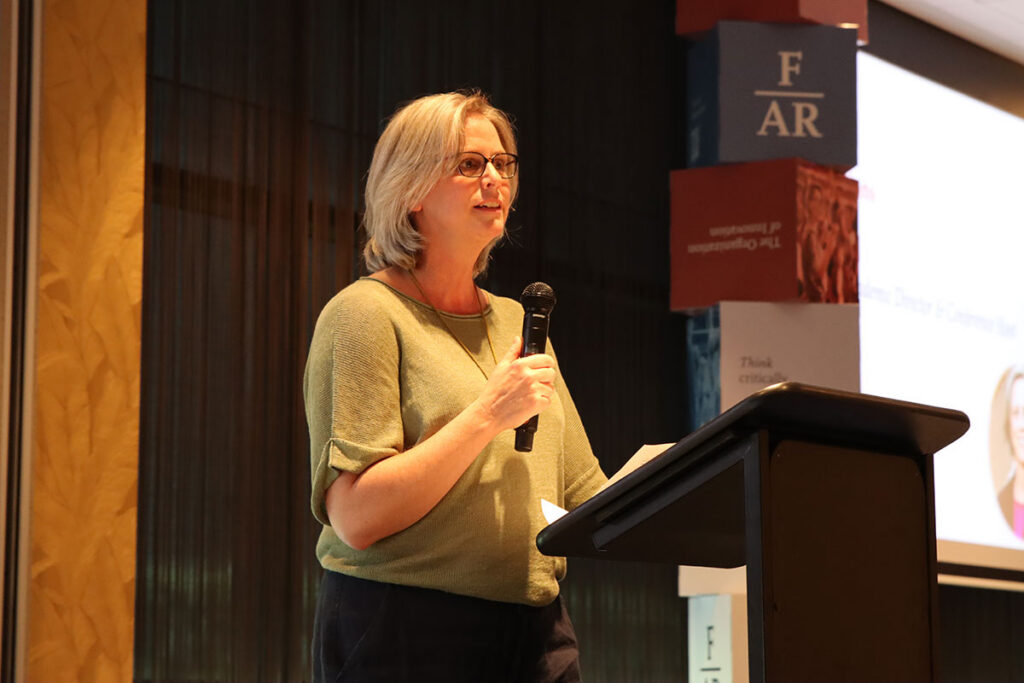
After the words of welcome by Anna Gold and Steven Maijoor, the conference started with a retrospective by Robert Knechel (former FAR academic board member), who reflected on the first ten years of the Foundation for Auditing Research. Looking back at a decade of collaboration between academia and practice, he also challenged the audience to think about the next ten years: which research questions deserve priority, and how can research continue to support a profession facing rapid technological and societal change?
The importance of people as drivers of innovation quickly emerged as a recurring theme. Bart Dierynck and Lobke Weijers presented research showing that many students still have a distorted view of the auditing profession. Bridging this gap is essential, not only to attract new talent, but also because the profession’s capacity to innovate depends on the people who choose to join it.
Artificial intelligence naturally featured in many sessions. During the practitioner panel chaired by Peter Eimers, participants discussed both the opportunities offered by AI and the practical challenges surrounding its implementation. Questions about confidentiality, responsible use of client information and the rapidly changing technological landscape illustrated that innovation requires careful governance.
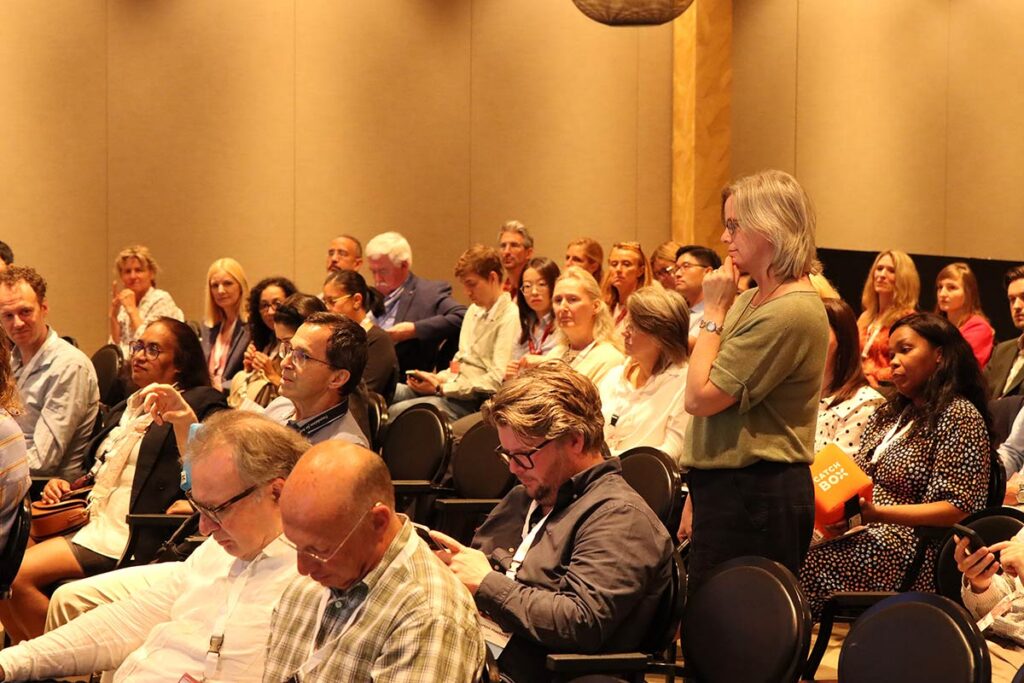
Xiaoxing Li subsequently explored the human side of AI adoption. Her research demonstrated that organizations wanting employees to learn from AI experts should also be aware of the social dynamics that accompany advice-seeking. Well-intended initiatives do not always produce the desired behavioral outcomes, illustrating that successful AI implementation is as much about organizational behavior as about technology itself.
The role of organizational culture was further developed by Diane Breesch and Marie-Laure Vandenhaute. Drawing on research into learning from errors, they argued that innovation thrives in environments where mistakes can be discussed openly. Organizations that foster psychological safety enable employees to learn, improve and innovate, whereas blame cultures discourage experimentation and ultimately hamper progress.
The second day began with a keynote by Mark Peecher, who reminded participants that, despite the explosion of data and AI, sound theory remains indispensable for meaningful research. He also challenged both practitioners and researchers to continue developing research agendas that address the profession’s most pressing questions, varying from sustainability assurance to the future role of auditors in an AI-driven environment.
Therese Grohnert broadened the discussion by focusing on learning within organizations. Rather than viewing professional development as simply completing training courses or earning continuing education credits, she emphasized the importance of reflection, culture, workplace learning and psychological safety as foundations for developing expertise. Against the backdrop of AI, this raises important questions about how organizations can continue to develop future generations of auditors.
Saskia Nijs subsequently zoomed out to the broader interaction between people and technology. She encouraged organizations to use technology in support of their primary objectives, rather than allowing technology to dictate the way work is organized. Alongside the opportunities, she also highlighted potential hidden costs, including social consequences, wellbeing, and the ‘endangered’ role of junior professionals in increasingly automated organizations.
The conference concluded with a practical illustration by Twan van Drunen and Gosse Overal from PwC, who demonstrated how technology can be applied within audit practice to predict compliance risks. Their presentation brought many of the conference themes together by showing how technological innovation, organizational learning and practical implementation can intersect in everyday professional practice.
Throughout the conference, one message consistently emerged. Innovation is not simply about adopting new technologies. It depends on organizations that attract talented people, encourage continuous learning, foster psychologically safe cultures and maintain a close dialogue between scientific research and professional practice.
The lively discussions between speakers and participants once again demonstrated the value of the FAR community in bringing those worlds together. As the profession continues to evolve, innovation will ultimately be determined not only by what technology makes possible, but by how organizations enable people to use it wisely.
The video of the presentations on the first day can be found here:
The videos of the presentations on the second day can be found here:
and here:
You can navigate through the individual presentations by clicking on the related time stamps in the description area.