|

Deception Detection in Auditing and Auditors’ Assessment of Risk of Material Misstatement Due to Fraud

The investing public has long looked to the independent financial-statement auditor to help prevent and detect instances of material financial-statement fraud. Yet, it has only been in recent decades that audit standards recognize explicitly that auditors are responsible for providing high assurance that the financial statements are not materially misstated due to fraud. Although once generally believed to be an exceedingly rare event, recent research suggests base rates of financial statement fraud may be as high or higher than ten percent of public companies. Cases of fraud that go undetected for years exacts a substantial toll on the confidence of the investing public in capital markets. At the same time, actually providing high assurance that a set of financial statements are not materially misstated due to fraud is difficult for individual auditors due to a combination of questionable economic incentives for individual audit teams to detect fraud as well as psychological preference to avoid believing that one’s own client – a socially close affiliate – has been engaging in deception of the investing public as well as the auditors themselves.

Please contact us for the file

Author

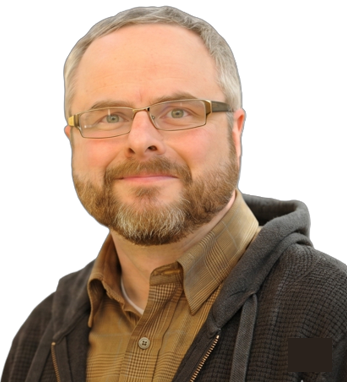
Mark Peecher

Prof. dr. Mark E. Peecher

Mark E. Peecher , CPA, is a professor of accountancy and a Deloitte Teaching Fellow at the University of Illinois, specializing in behavioral auditing and accounting research. He holds a bachelor’s, master’s, and Ph.D. degrees in accountancy from Illinois. Prior to returning to his alma mater, he was a faculty member at the University of Washington. An active member in the AAA’s Audit Section, Mark currently serves as the Audit Section’s past president.

Professor Peecher’s business-press writings about auditing have appeared in The Wall Street Journal, and his scholarly writings have appeared in Accounting, Organizations & Society, Auditing: A Journal of Practice & Theory, Contemporary Accounting Research, International Journal of Auditing, Journal of Accounting Research, Organizational Behavior and Human Decision Processes, and The Accounting Review. He has presented his research at numerous conferences, consortia, and universities, and he has served on the editorial boards at Auditing: A Journal of Practice & Theory, The Accounting Review, and Issues in Accounting Education. Mark enjoys teaching both undergraduate courses and doctoral seminars related to auditing. He particularly likes helping to mentor doctoral students, three of whom have won outstanding doctoral dissertation awards.

Dr. Sebastian Stirnkorb

Sebastian Stirnkorb is an Assistant Professor of Accountancy at the University of Illinois Urbana-Champaign, Gies College of Business. His research focuses on how the formatting and complexity of corporate disclosures influence the judgment and decision-making of financial statement users, preparers, and auditors. Using economics-based experimental methods, he explores topics such as disclosure credibility, investor learning, earnings management, and fraud detection. His work has practical implications for improving transparency and trust in financial reporting.

Dr. D. Williams

Devin Williams is an assistant professor in accounting in the Price College of Business. He earned his Ph.D. in business administration with an emphasis on accounting from The University of Florida. Prior to joining the University of Oklahoma, he taught graduate-level auditing courses at the University of Illinois. Before working in academia, Williams worked in external auditing at Deloitte & Touche LLP.

Prof. J.L. Hobson (deceased)