2016B03 – Moving audit teams forward – Designing firm environments for sustainable learning from errors
Project Number – 2016B03

2016B03 – Moving audit teams forward – Designing firm environments for sustainable learning from errors

What?

What?

This project examines how audit firms can design work environments that support learning from errors and improve audit judgment quality. It focuses on the interaction between individual auditors’ characteristics and the firm’s organizational context, particularly how error management and team learning behaviors influence how auditors develop, apply judgment, and improve performance over time.

Why?

Audit quality depends not only on individual expertise but also on how firms respond to errors and promote learning within audit teams. Understanding how organizational culture, leadership, and error management practices shape auditors’ learning helps firms design environments that encourage reflection, knowledge sharing, and continuous improvement. These insights are relevant for audit firms seeking to strengthen judgment quality and for regulators and standard setters interested in sustainable drivers of audit quality.

No related news items found.
In the FARview Podcast Series, FAR staff members conduct interviews with academics and professionals regarding the practical relevance of academic research in the field of auditing In this podcast, our guest is professor Prof. dr. Wim Gijselaers. Gijselaers is professor of educational research at the School of Business and Economics at Maastricht University. His research focuses on educational innovation in higher education, social determinants of team cognition and team performance, and judgment and decision making in management and accounting. Gijselaers answers the questions that could not be answered after his presentation during the FAR Conference, due to time constraints. Although this interview was planned to be an extension of the Q&A-session, it evolved into a broader podcast. So, this podcast went beyond answering the remaining conference questions. This written report contains an edited and abbreviated transcript of the interview
This commemorative booklet marks the tenth anniversary of the Foundation for Auditing Research (FAR). It reflects on FAR’s journey as a unique platform where academic research and audit practice meet to advance audit quality. The publication highlights:
  • FAR’s Mission and Impact: How FAR evolved from an ambition into a reality, fostering collaboration between researchers and practitioners through access to real-world audit data.
  • Insights from Leadership: An interview with founding academic director Jan Bouwens and his successor Anna Gold on FAR’s achievements, challenges, and future priorities.
  • Research Highlights: Four featured studies on topics such as auditors’ commercial efforts, student expectations versus auditor experiences, data analytics and professional skepticism, and learning within audit teams.
  • Key Figures and Projects: An overview of FAR’s outputs, including practice notes, masterclasses, conferences, and a growing portfolio of research projects.
The booklet not only looks back with pride but also outlines ambitions for the future of strengthening knowledge transfer, increasing practical usability of research, and deepening engagement across audit firms and academia.
Lowering professional turnover is of paramount importance for professional service firms, as with each professional, crucial proprietary knowledge leaves the firm. Based on the need to retain this crucial knowledge in the firm, this study explores whether factors that drive learning at work also mitigate professionals’ turnover behavior. Building on insights from both workplace learning and turnover research, this study follows 96 professional auditors across a period of 5 years to determine how drivers for workplace learning at the organizational, the social interaction, and the individual level relate to turnover behavior.
Organizations have a marked interest in fostering team learning to manage performance and innovation. However, practitioners and researchers currently lack coherent knowledge on which drivers are effective at fostering team learning. Along with team learning, we also focus on the emergent states of psychological safety, shared cognition, team potency/efficacy, and cohesion, previously related to team learning. In this meta analysis, we include 50 quantitative studies providing information on 4,778 teams of professionals across manufacturing, product development, academic research and teaching, health care, and professional services. First, we find that team learning correlates positively, if moderately, with four organization-level drivers: top-level leadership, organizational culture, job resources, and organizational infrastructure. Second, two of these drivers also correlate robustly with team emergent states: organizational culture and job resources. These findings provide specific levers and estimates of relative influence to guide managerial practice and future research on team learning.
Accountantsorganisaties zijn druk bezig om de determinanten van controlekwaliteit te doorgronden en op basis daarvan hun beleid aan te scherpen. Veel aandacht gaat daarbij uit naar het creëren van een kwaliteitsgeoriënteerde cultuur en het faciliteren van adequaat leergedrag. Recent onderzoek van Maastricht University verschaft hiervoor belangrijke inzichten. Uit de resultaten blijkt onder andere dat toon aan de top, infrastructuur, bedrijfscultuur en job resources het leergedrag in belangrijke mate beïnvloeden. Bijvoorbeeld: de mate waarin ruimte bestaat om verschillen van mening naar elkaar uit te spreken heeft invloed op de kwaliteit van het geleverde werk.  
Organizations wishing to foster learning at the team level can do so effectively through providing teams with resources such as autonomy and enrichment, next to general support of money and time. These resources should be provided in a supportive, learning-driven culture shaped by engaged, supportive leaders that are connected with their teams to create the best possible conditions for teams to engage in continuous learning, either directly or, even more effectively, by enabling teams to develop psychological safety, shared cognition, potency/efficacy, as well as social and task cohesion. Creating this system of conditions for effective team learning requires close alignment of different functions within an organization, bringing leadership and HR together to achieve a shared goal.  
Over the past ten years, oversight bodies, regulators, governments, and clients have been demanding audit firms deliver higher audit quality, closing the expectations gap. As a response, audit firms have been working on developing and implementing new procedures, structures and audit programs. However, this ‘hard’ approach has not yielded the desired improvements.  
No related events found.

Project info

Project Lead

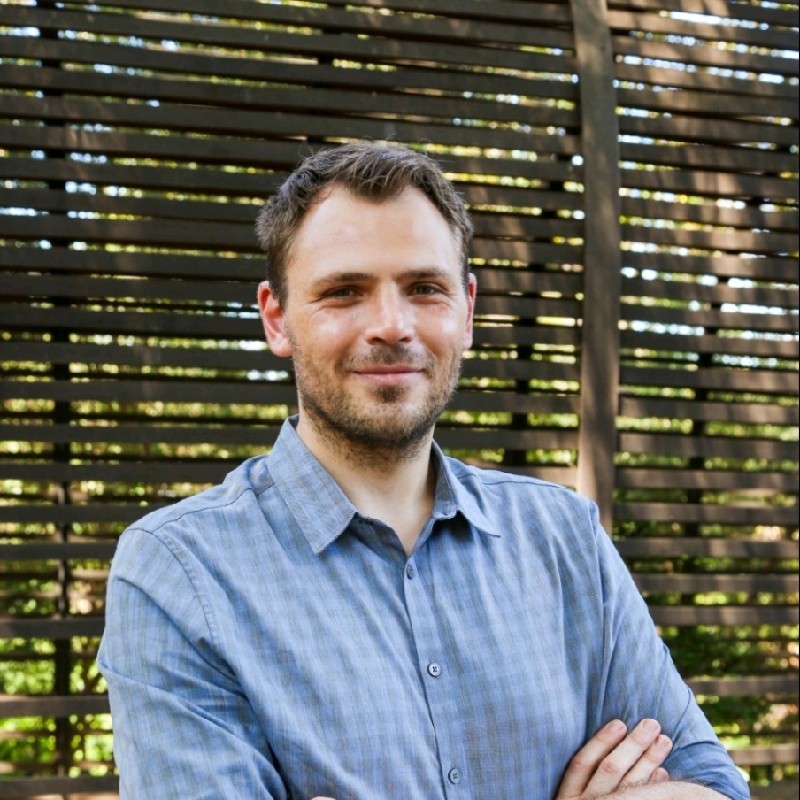
Prof. dr. Wim Gijselaers

Research team

Jandre Jansen van Rensburg
Piet van den Bossche
Laura Smeets
Amy C. Edmondson
Dr. Therese Grohnert
Prof. dr. Wim Gijselaers
Prof. dr. Roger Meuwissen

Involved University

Theme(s)

Project Number – 2016B03

Newsletter

Receive updates on FAR research, publications and events.

Filter projects: 

Project Lead
Theme Filter
University Filter
1 - 10 of 52 projects